
Meet the Expert: Anthony Bull
Welcome to 'Meet the Expert', our news series that brings you informative interviews with Armed Forces researchers, policy makers, and service providers. Read on to learn about current work, aspirations for progress and future work, and insights into expert perspectives on key issues impacting the Armed Forces community.
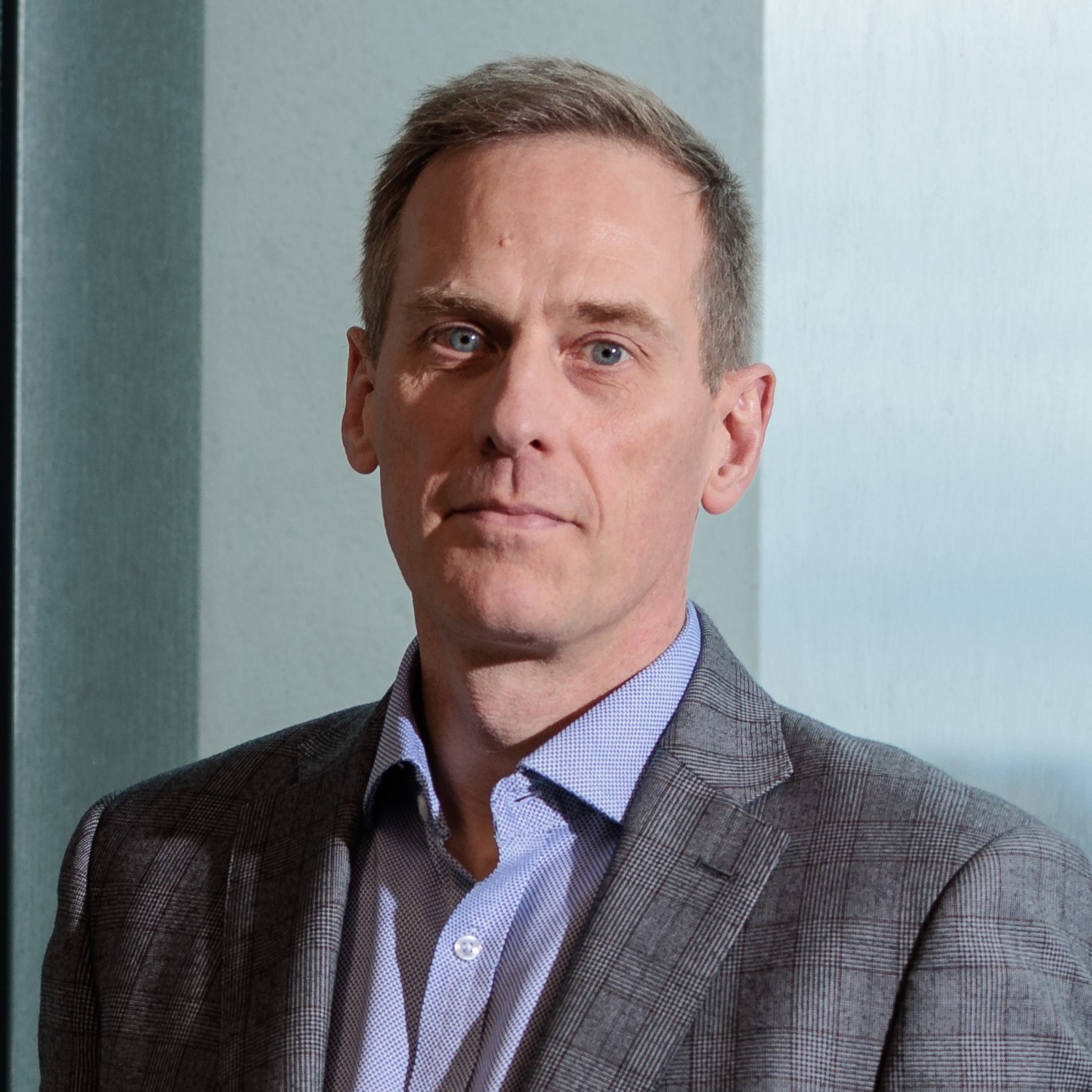 In this issue, we interviewed Professor Anthony Bull, principal investigator at the Centre for Injury Studies, Imperial College London. The primary focus of Professor Bull's current research is to improve the mitigation of injury, improve and advance treatment, rehabilitation and recovery thus increasing lifelong health and quality of life after blast injury.
1. Please tell us about your background and how you came to be involved in work relating to the Armed Forces community.
Originally a mechanical engineer, I moved into bioengineering for my PhD. My research is on the musculoskeletal system (bones, joints and muscles). In 2008, a former PhD student of mine who was a medic in the military introduced me to the then Defence Professor of Trauma and Orthopaedics. The meeting was transformational for me; it was at the height of the Afghanistan conflict and we identified that engineers and medics working collaboratively had the potential to address the urgent need to prevent serious injuries in the UK military that we were seeing, improve rehabilitation and long-term care, influence policy and standards (including for protective equipment and vehicles), and make sure that we learned lessons from Afghanistan for future conflicts. We established the Centre for Blast Injury Studies (now Centre for Injury Studies), to address this need.
2. What research projects are you currently working on, and how do they fit into the bigger picture of understanding and supporting the Armed Forces community?
The Centre for Injury Studies (CIS) is involved in co-leading ADVANCE (with the Ministry of Defence (MoD) and King’s College London), a longitudinal cohort study investigating the physical and psychosocial outcomes of our UK military battlefield casualties from Afghanistan. This has multiple benefits to the Armed Forces community, by, for example, providing direct benefit to the 1,000+ participants as they receive health assessments every few years; teaching us about the effects of conflict injury and how we can support those injured going forward in time; as well as helping us to understand the long-term effects of the immediate life-saving medical interventions that these casualties received. We have a duty of care to understand these long-term effects and act on them, because never have we seen so many survivors with such severe injuries.
CIS is a very large group, so it has many other studies relevant to the Armed Forces community, all related to physical health and the effects of Service and trauma in Service. We have a particular focus on those with musculoskeletal injuries, including amputees, as well as traumatic brain injury. We conduct basic research (understanding the science of what is going on) and applied translational research. This includes projects on orthopaedic implants for amputees, biofeedback training for those with severe injuries, and novel personal protective equipment (including boots, helmets, and clothing), among others.
3. What other research or policy areas relating to the Armed Forces community are you especially passionate about or feel need further attention?
In recent years, there has been a major focus on those who served in Afghanistan, and we appropriately prioritised them. We all know that the Armed Forces community is much larger than this cohort, and yet there is much that remains unknown about them. I am motivated to work harder to understand the physical health of all our ex-Service personnel and the effects of Service on long-term physical health. Wouldn’t it be fantastic if all our ‘cohorts’ of ex-Service personnel were part of an ADVANCE-type study?
4. What are your future aspirations for the impact and utilisation of your work/research?
I am driven by seeing the potential for societal impact of my research and achieving that impact by engagement with all stakeholders: policy makers, the broader Armed Forces community, technologists, and medics. I would like to increase the academic base for this research beyond my own institution and current collaborators so that the very best researchers are incentivised to work for the benefit of the Armed Forces community.
5. What do you think are the key challenges impacting current ex-Service personnel and their families, and the next generation of ex-Service personnel and how do you think research and/or policy can be best used to address them?
It is very hard to be comprehensive in answering this question. There are so many things that are important for individuals, but not necessarily important for all. The connection between physical and mental health is critical and, although more and more is now known about this, we need to fully explore this connection to be able to better prepare for, and resource, ex-Service personnel needs going forward.
Coming from a research background, I will always focus on evidence: evidence will only be obtained if there is good data. Therefore, continued and more detailed research is crucial to understand both current challenges and future challenges.
6. Can you tell us about the methods you tend to use in your research, and why you gravitate towards these kinds of approaches?
Like all application-driven researchers, I use all methods that can help us get to an answer. As an engineer, I also generate new methods when novelty is needed. For example, we have developed advanced computational tools that enable us to understand the biomechanics (forces, deformation and movement) of the musculoskeletal system in healthy and injured individuals. These new tools/methods are what we use to help design rehabilitation protocols and devices for those with limb loss.
7. Given unlimited funding and time, what would be your dream piece of research to undertake involving the Armed Forces community?
Data. Data. Data. We need to establish more longitudinal cohort studies of all ex-Service personnel groups.
Many thanks to Professor Anthony Bull for sharing his insights.
Catch us next month for another interesting and informative interview with an expert from the Armed Forces community.